How to Win a Case Competition in 7 Hours
 By the way, a version of this article was posted to UWaterloo’s website, you can read it here.
Fusion Conference 2025 was my first case competition (ever).
Don’t make my mistake and wait until your final term to participate.
You might just miss out on the chance to join an exceptional team, turn a blank slide deck into a healthtech pitch in under an hour, and propose an idea to a panel of industry experts — and win, while you’re at it.
Proof? Here’s my experience at Fusion this year:
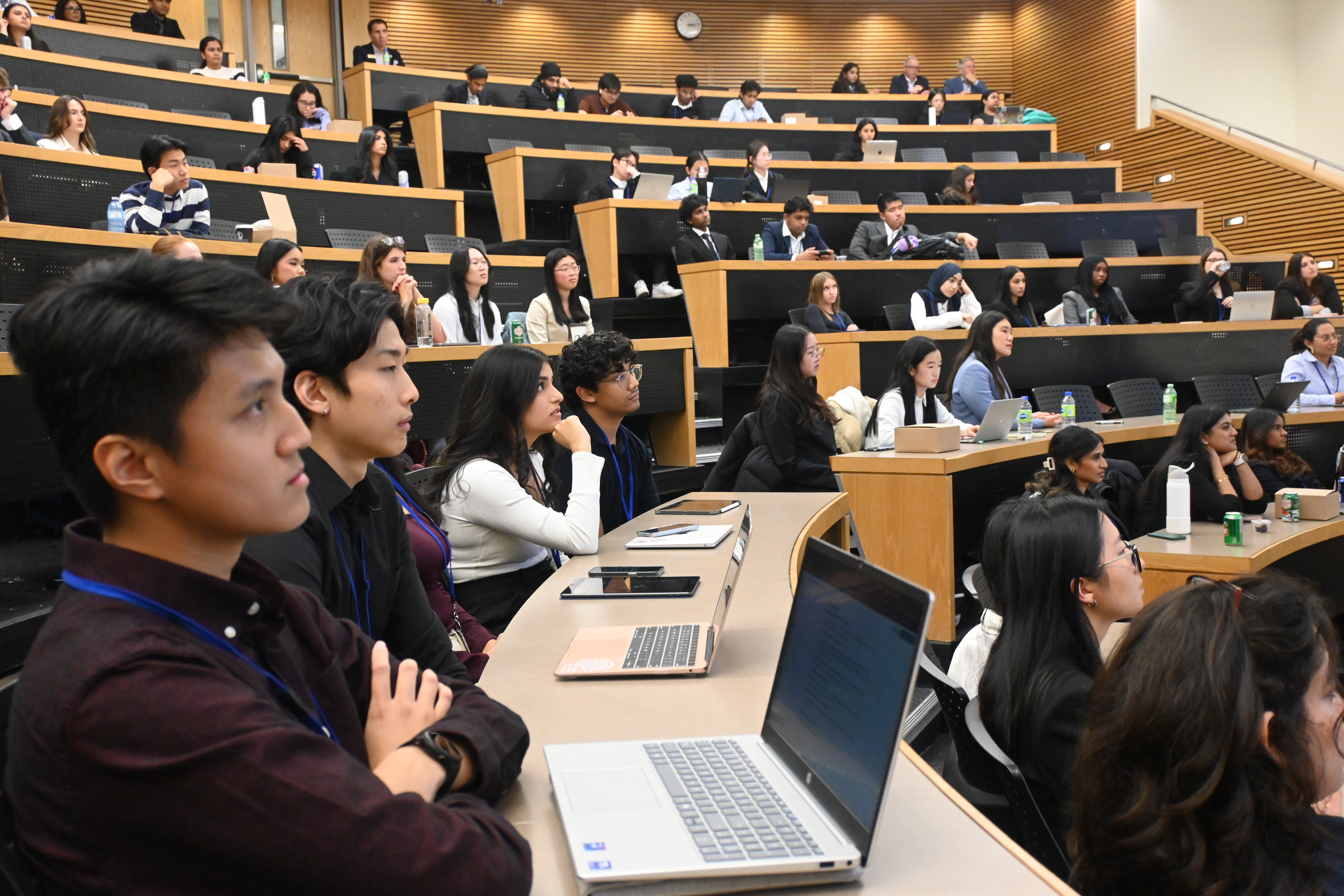
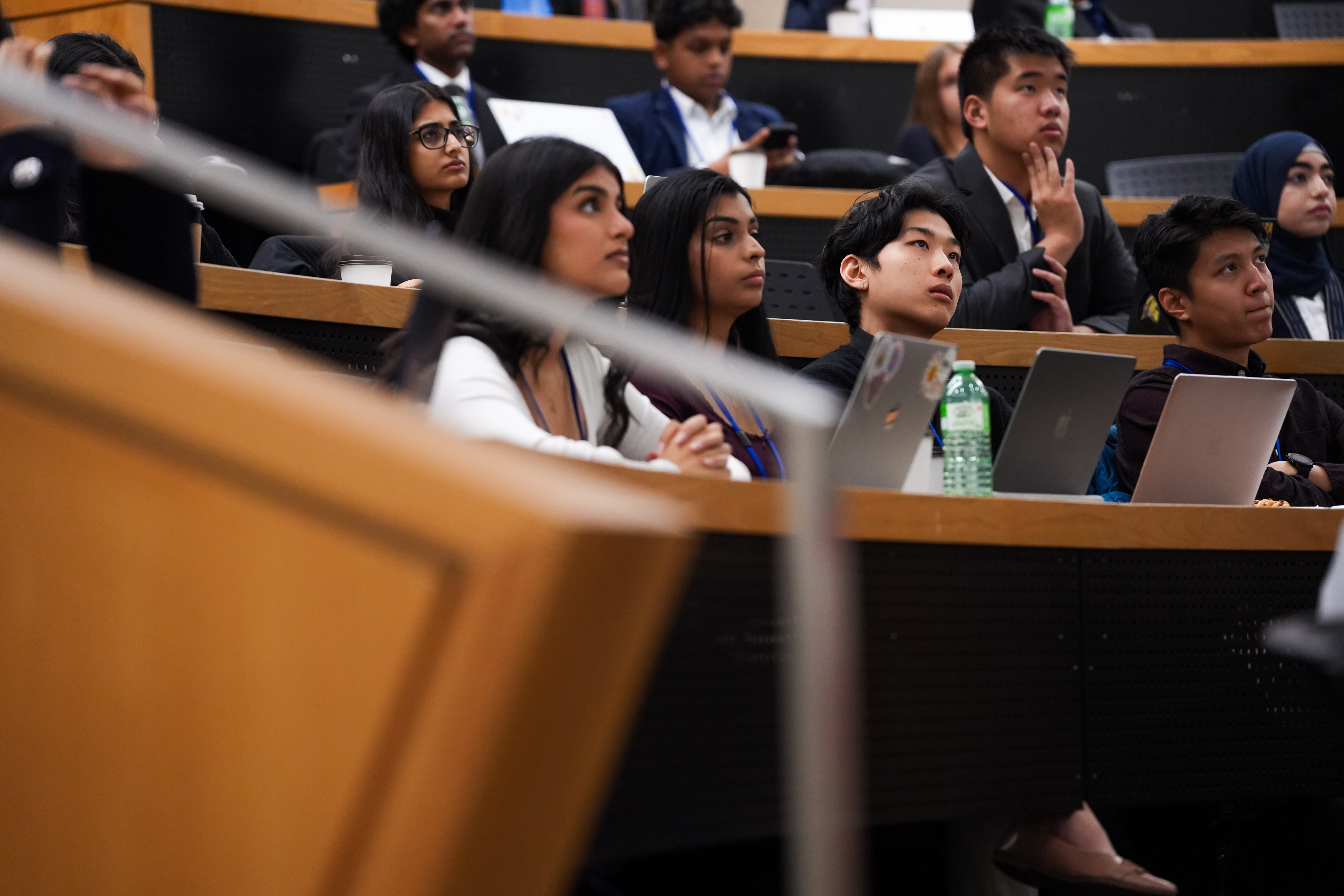
The Fusion team did an excellent job handling arrival and registration. It was an incredibly diverse mix of attendees: accounting, science, and business students in equal measure. Soon, we heard from the day’s keynote speaker, UWaterloo alumnus Gavin Duggan — a senior engineer at Google who had worked at Alphabet’s moonshot factory, X.
The keynote was a goldmine for anyone interested in healthtech innovation and business. And we’d need those insights soon, because the day’s topic was about to be revealed:
Improving cancer services in Ontario.
It’s a massive topic. Where do you even begin? With less than two hours on the clock, we had to:
- Understand our particular issue in Ontario
- Diagnose the problem with current solutions
- Propose a better one
- Wrap it up into a pitch and present to judges
Piece of cake, right?
 It’s 12:15. We landed on our idea twenty minutes ago, and we’ve got twenty minutes left to make it look presentable. Every new study we dig up forces us to pivot — strategy shifts, slides get rewritten, messaging gets reworked on the fly. We split up: three of us run the pitch, two grind through the deck. We’re pacing, practicing, stitching it all together as the timer ticks down.
Easily the most stressful Saturday lunch of my life — and certainly one of the most fun.
 We submitted the deck with seconds to spare, survived a dramatic first pitch, and finally got to breathe — and eat the delicious conference lunch. The other teams came with wildly creative ideas: bioengineered sensors, AI carcinogen detection, all technology I was mentally bookmarking to research later.
Then came the announcements for the six finalists.
First team. Second. Third. Fourth. Fifth. Our row went silent.
And then… our name.
First, we celebrated! Then immediate panic. We had under an hour to expand the pitch, rebuild the slides, and prep for questions from a panel with decades of experience. With two hours of ‘experience’ under our belt, we got to work.
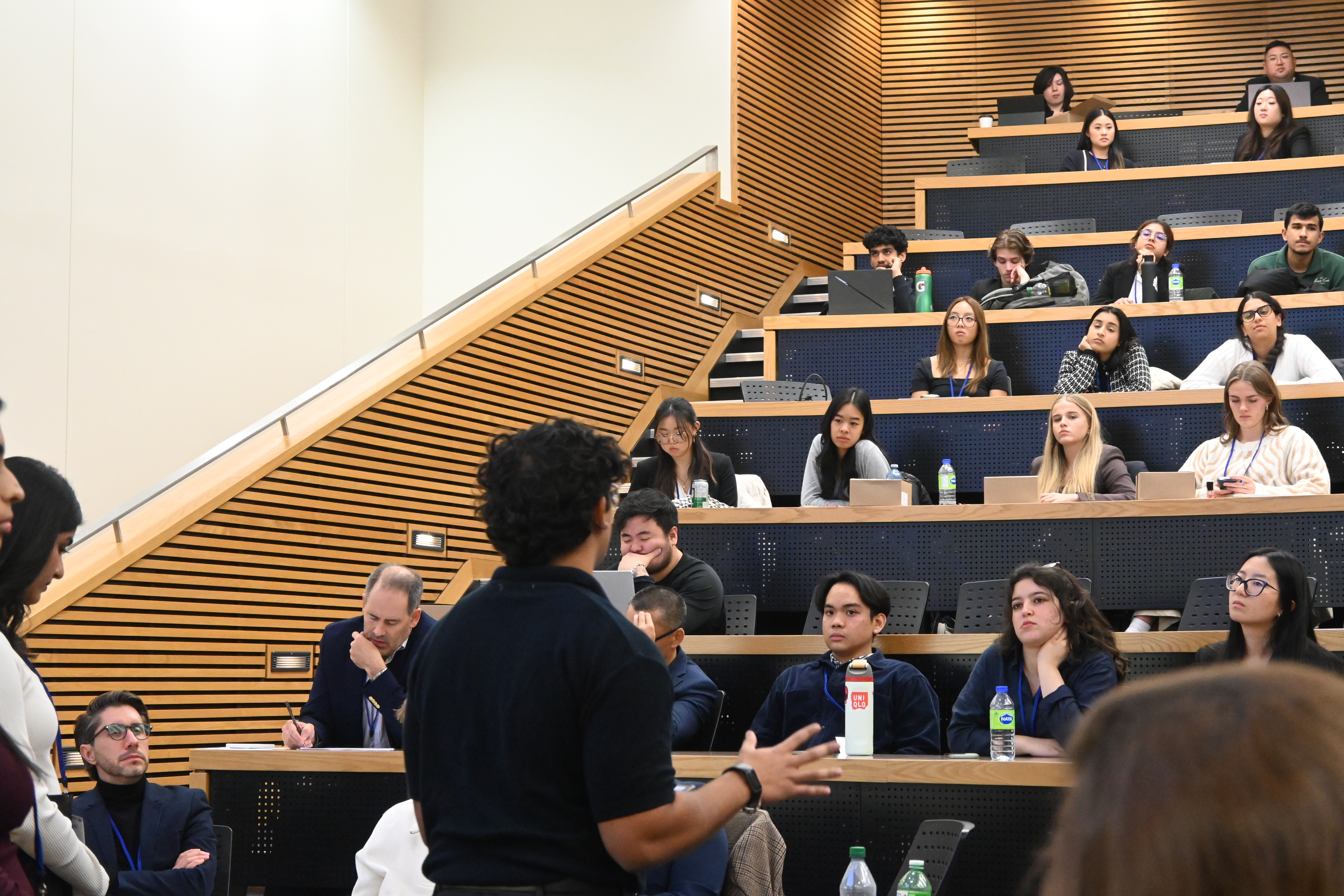
We pitched last, after five other incredibly innovative ideas — drone delivery networks, AI for clinical trials, even whale-protein research. Anyone would’ve been nervous. But by then, we had figured out our workflow and learned to trust each other; we were running like a well-oiled machine.
Then came the final announcement.
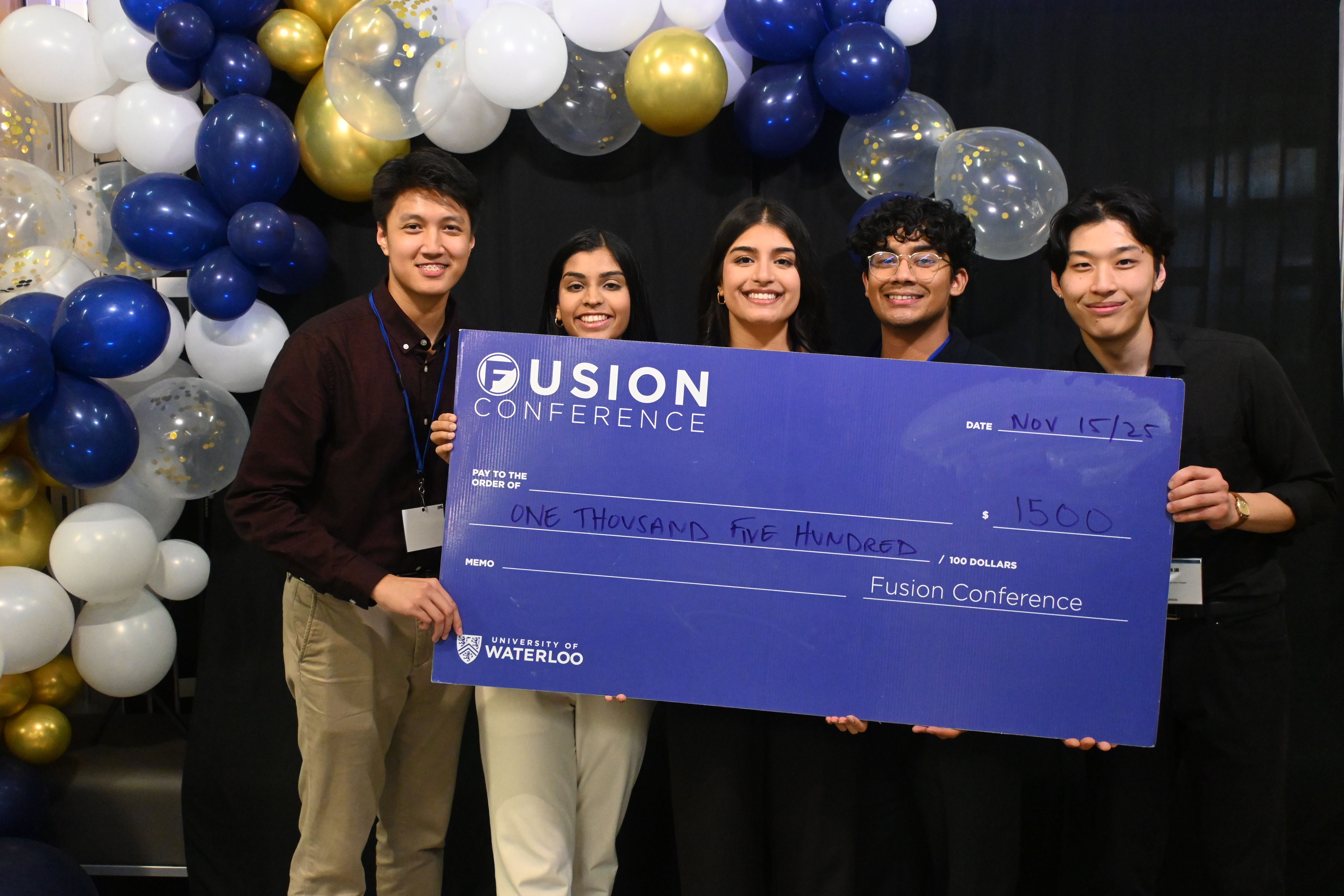
Most innovative solution. $1,500 prize. The judges announced the winning idea — the same one we’d built together in an empty Hagey Hall classroom that morning.
It was ours!
Winning a prize at Fusion was obviously a highlight, but there were some takeaways from the day that I think any attendee can agree with:
- You can get a ridiculous amount of work done in a few hours when you’re thrown into a room full of smart, ambitious people and tasked with solving a big problem.
- The best ideas come from collaboration. Sharing half-formed thoughts and letting others build on them is what made our pitch work.
- Events like this are as much about the people as the problem. Some conversations lasted two minutes; others turned into exchanges I’m still following up on. If you want to meet more people in your program or industry, join a case competition like this one.
My only regret? Not joining sooner.
A huge thanks to the Fusion team for putting on a great conference, and of course, my incredible team members, Kiranjot, Roma, Inigo, and Yubin.